I found this online, Constance. It is not mine:
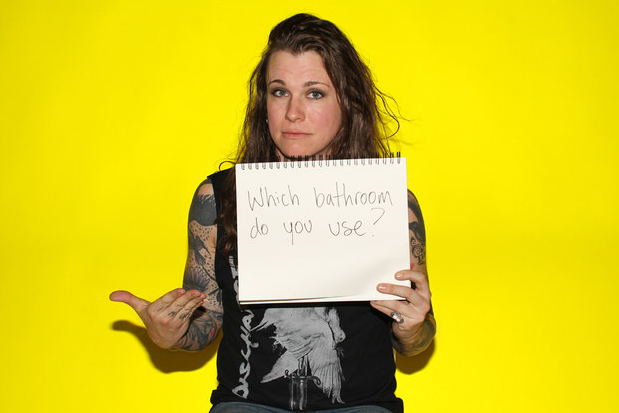


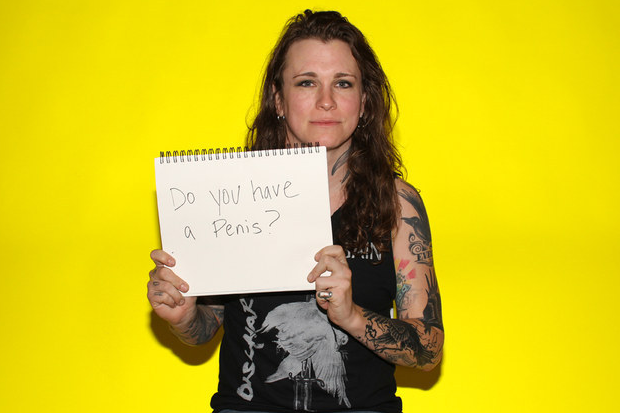
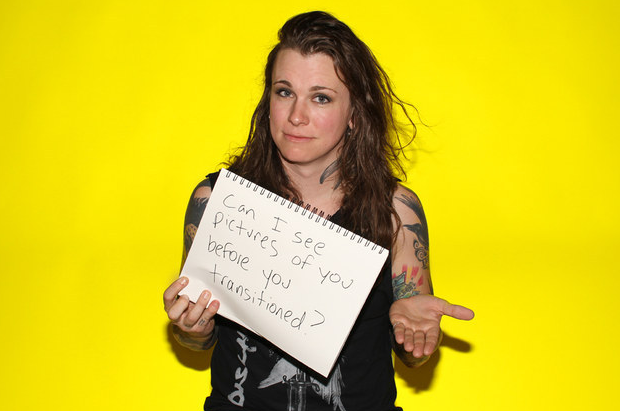
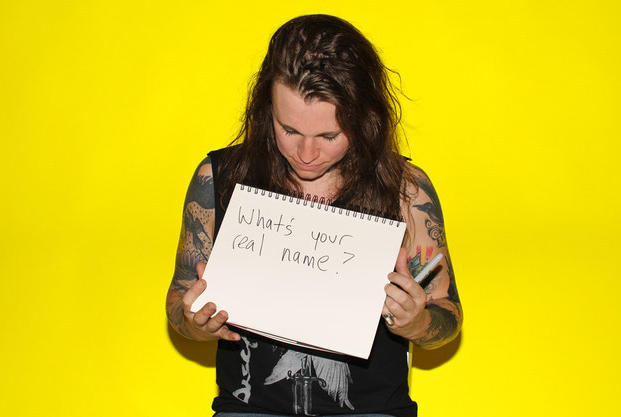

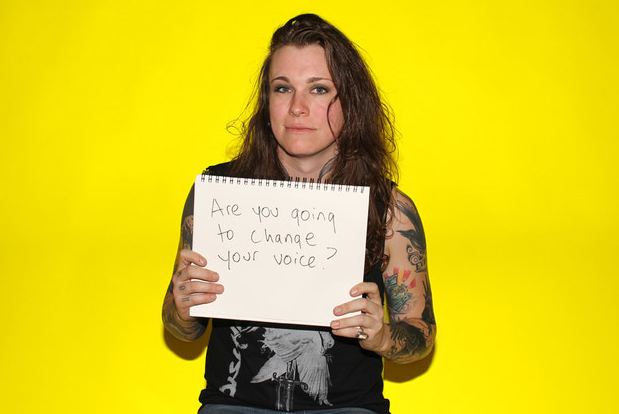
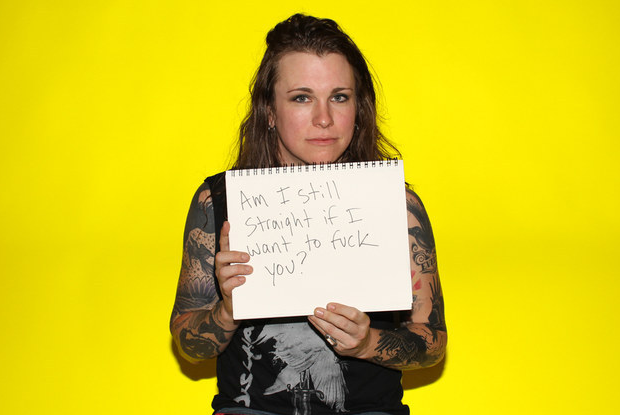


10 Things You’re Actually Saying When You Ignore Someone’s Gender Pronouns — Everyday Feminism.
Constance…immediately pass this on to every stubborn person who is important to you. It is that good, and it does give the basic and true message communicated by those who refuse to use proper pronouns.
I know in my life? So unfortunate, but the people that I love, was willing to sacrifice for and even die a bit for, well, they did not feel the same way about me and they engaged in terrible acts of betrayal.
So, weirdly, it set me free.
Now? Well, thanks to them, and my wonderful horrible very own haters who come as dementors, I have toughened up…and here is the truth:
When you gender-shame me with improper pronouns and hate filled speech, you identify yourself as a hater, and make the whole thing easy for me. I can save my love and effort for those who are engaged and loving.
“But wait!!” I can hear the haters right now. “Wait! You have to love your enemies and be kind to those who persecute you!” Well hater…I will after you do. You stop showing up here spewing your crap, and show me how to love…and in my case, I am not even your enemy and have never done a thing to you, have never even met you! So you have the easy down hill…you simply be nice and love me…and then I will think about it.
“But what can I do to love you??” asks the hater…
Use the proper pronouns. We’ll start there.
Charissa

Transgender Children – Transgender Stories – Woman’s Day.
Okay, I just bawled my way thru this story…Oh Mama, please bless this woman for her faithful love of her son and of you. Please honor her for praying that prayer “Change my heart”, instead of wreaking havoc by climbing up on the throne and trying to change everything and everyone else!
Love, Charissa

Hi Constance: This came across the transom today, and I found it fascinating! Clearly, the phenomenon of gender variations has been extant as long as gender. I am quite interested in reading of how this has been lived out socially in other times and places, cultures and spaced.
I hope you find it enlightening as well.
Charissa

Going beyond the Western gender binary – unlearning our backward cultural conditioning
In Western colonial society (which dominates many aspects of the globalized, capitalist world today) we operate under the presumption that there are only two genders, male and female. But gender is a social construction. One’s options for what gender they identify with are shaped by the culture they are born into. Biological factors are most-often the primary driving forces that choose among the available socially-constructed gender categories.
Cultures around the world have different ways of talking about, thinking about, and identifying gender. It’s often a challenge for (particularly cis-sexual) Westerns to think about other ways gender can be socially constructed. Westerns have the false equivalency of gender and sex drilled into their eternal psyche from the time they are very young, and re-enforced through examples in popular culture. There is no biological reality to gender. Many Westerners have the bizarre belief that one’s XY-sex-determination should also inform one’s gender identity, a socially constructed role in society.
In some cultures, there is no distinction made between gender and sexual orientation and the same can be said for sexual orientation – our culture socially-constructs the options and our biology helps us identify which socially-constructed option feels most ‘right’ and best resonates with us.
I’ve attached some photos to offer some examples of non-colonial, non-Western construction of gender. They’ve all been uploaded onto our Facebook page photostream in case you’d like to ‘like’ or ‘share’ them there. There are literally hundreds of ‘third-gender’ identifying peoples around the world. The eight I’ve chosen are mostly examples I remember from some of my anthropology courses but if you google ‘third genders’ you can find many lists and examples.
Who cares? Why it matters.
The most obvious reason to care about the way our culture has constructed gender and sexual orientation is to deepen one’s capacity for solidarity with people who identify as transgender, transsexual, and others whose gender or sexual identity exists outside of binary Western culture.
But there are other reasons as well. Western culture’s binary nature often creates non-sensical, problematic binary identity constructions that are inherently problematic. For example, I believe that Western masculinity (dominance, aggression, lack of communication, lack of emotional expression, etc) is inherently problematic. I believe that to be the reason why most acts of large-scale-violence and terror are committed by men (see: 100% of the mass school shootings in the United States), and I believe it fosters a degree of internal misery within people who heavily adopt these particular ‘masculine’ traits.
In the age of information, and the age of global connectivity, there is no longer any reason (particularly for young people) to feel isolated or restricted to Western definitions of gender, sexual orientation and identity in general. I think the social ramifications of a generation where more and more people begin to identify outside of the gender binary would be tremendous, and I think we should all consider how we can unlearn our cultural conditioning to embrace other, perhaps less exploitative and dominating identities.
Background information on the identities depicted in the above images:
Hijras
Hijras are male-body-born, feminine-gender-identifying people who live in South Asia (mostly in India & Nepal). Many Hijras live in well-defined, organized, all-Hijra communities, led by a guru.
Although many Hijras identify as Muslim, many practice a form of syncretism that draws on multiple religions; seeing themselves to be neither men nor women, Hijras practice rituals for both men and women.
Hijras belong to a special caste. They are usually devotees of the mother goddess Bahuchara Mata, Lord Shiva, or both.
Nandi female husbands
Among the Nandi in Western Kenya, one social identity option for women is to become a female husband, and thus a man in society’s eyes. Female husbands are expected to become men and take on all of the social and cultural responsibilities of a man, including finding a wife to marry and passing on property to the next generation through marriage. Female husbands may have lived their lives as women and may even be married to a man, but once she becomes a female-husband, she is expected to be a man. Women married to female-husbands may have sex with single men uninterested in commitment in order to become pregnant, but the female-husband (who is often an older woman, often a widow) will father the child of said pregnancy and treat the child like her own.
Two-spirited people
Two-Spirit is an umbrella term sometimes used for what was once commonly known as ‘berdaches’, Indigenous North Americans who fulfill one of many mixed gender roles found traditionally among many Native Americans and Canadian First Nations communities. The term usually indicates a person whose body simultaneously manifests both a masculine and a feminine spirit. Male and female two-spirits have been “documented in over 130 tribes, in every region of North America.”
Travesti
In South America (with a large presence in Brazil), a travesti is a person who was assigned male at birth who has a feminine gender identity and is primarily sexually attracted to masculine men. Therefore, sometimes the distinction between gender identity and sexual orientation is not made. Travestis have been described as a third gender, but not all see themselves this way. Travestis often will begin taking female hormones and injecting silicone to enlargen their backsides as boys and continue the process into womanhood.
The work of cultural Anthropologist Don Kulick (a gay male by Western definitions) in Brazil demonstrated that gender construction in Brazil is binary (like Western gender construction), but unlike Western gender construction, instead of having a male-female binary, there is a male-notmale binary.
In this particular construction of gender:
** Males include: men who have sex with women, men who have sex with Travestis but are never on the receiving end of anal sex, men who have sex with men but are never on the receiving end of anal sex.
** Not-males include: women, men who receive anal sex from ‘male’ gay men or from Travestis.
Fa’afafine
Fa’afafine are the gender liminal, or third-gendered people of Samoa. A recognized and integral part of traditional Samoan culture, fa’afafine, born biologically male, embody both male and female gender traits. Their gendered behavior typically ranges from extravagantly feminine to mundanely masculine
Waria
Waria is a traditional third general role found in modern Indonesia. Additionally, the Bugis culture of Sulawesi (one of the four larger Sunda Islands of Indonesia) has been described as having three sexes (male, female and intersex) as well as five genders with distinct social roles.
Six Genders of old Israel
In the old Kingdom of Israel (1020–931 BCE) there were six officially recognized genders:
Zachar: male
Nekeveh: female
Androgynos: both male and female
Tumtum: gender neutral/without definite gender
Aylonit: female-to-male transgender people
Saris: male-to-female transgender people (often inaccurately translated as “eunuch”)
Kathoey
Australian scholar of sexual politics in Thailand Peter Jackson’s work indicates that the term “kathoey” was used in pre-modern times to refer to intersexual people, and that the usage changed in the middle of the twentieth century to cover cross-dressing males, to create what is now a gender identity unique to Thailand. Thailand also has three identities related to female-bodied people: Tom, Dee, and heterosexual woman.
-Robert
EDIT: So let me clearly say that in no way am I intentionally encouraging white people (or anyone else) to appropriate these identities. Rather, I hope that this post and conversations like this will lead to an understanding of cultural diversity and other gender constructions/identities and an understanding that there is no biological reality to gender, and that gender manifests itself in many beautiful ways across many cultures.
I AM encouraging people in colonial society to have a less-binary, more nuanced approach to gender that doesn’t lead to so much domination and exploitation.
I also understand that in order to talk about these things, words like ‘male-bodied’ or male are inherently western concepts. Each of these societies and cultures have other ways of talking about these identities. Although I wasn’t born in the U.S. I have spent most of my life and the entirety of my adult life in the United States. I speak no languages other than English. There are concepts that I can’t understand, that my language limits me from even talking about, and in order to communicate these ideas, I am restricted by the only language I have available to talk about these concepts with. My perspective is etic. I do not belong to the above cultures, so when I talk about these things and use the English language to describe them, I am limited in my options for describing a concept as abstract as gender. The very categories of gender and sexuality belong to the cultural lens through which I view the world and I could not possibly provide a comprehensive emic analysis of the way the things we call ‘gender and sexuality’ actually are understood (if at all) within these cultures. In that way, mine is a very limited perspective. But it is geared toward other people living in Western society and it is aimed at changing this culture, not to appropriate these others but to not be so terrible toward gender and sexual variant people in this culture and to begin to question the implications of how we define gender and sexuality both personally, and as a whole culture.
Also, there’s some problematic stuff in the way I framed this and some of these only have one source.
-Robert
8 Things Parents of Trans Kids Want You to Know | Brynn Tannehill.
Posted without comment, on advice from my bff and my baby.
Constance, please read this…please hear hearts
Charissa
‘Gender Confirmation Surgery’: What’s in a Name? | Loren S. Schechter, M.D., F.A.C.S..
Hi Constance… I just referred to this in a comment over at Dani’s blog, which hopefully I handled in a graceful and kind way.
I thought you all might enjoy reading it as well.
Blessings,
Charissa

Coming Out – Yes, it still does matter – LGBTQ Nation.
Constance…how ironic that it is “Coming Out Day” today…I post a really great article about it and while it deals with the topic of sexual orientation and being public about that, it translates perfectly over to gender orientation as well.
Salient words for me here (I substituted transgender for gay):
“Truthfully, most people believe that just saying the words “I’m transgender” means you’ve come out. In a sense it does, however, the real coming out, in my opinion, is when you look at that reflection you see in the mirror and say “I’m Transgender” and you don’t look away in shame – that’s when you’ve come out.
When you can accept yourself and love who you are and understand that the world can be cold and lonely and ignorant and intolerant – and you can still smile at your own reflection – you’ve come out.”
I have a long road ahead of me, God willing…one that I have just begun to scratch the surface of the joys and sorrows waiting.
But something is different: joys and sorrows are old acquaintences, especially the sorrows, and I walked with them in hollowness and null, void. Oh yes, They were there, are there…but:
What is different is me. Me. I am here now, and perhaps that will tip the balance in my favor at last.
“I’m skert Mama!!”
“I got this too, Baby…I got this too.”

Constance, this article is really good. Pass it along, please.
Sorry for my terse prose…I am feeling a bit down.
Running to Mama…Charissa Grace


Originally published on The Huffington Post and cross-posted here with the author’s permission.
Recently, a video about a transgender child in California named Ryland Whittington went viral. It is beautiful and moving and shows the power of unconditional parental love.
Sadly, like every other conversation about transgender children, the comments section was often unkind. Scanning the comments, I saw the same poorly thought-out ideas keep popping up. Many of them were similar to things said about transgender adults, but others were particular to transgender children.
I think it’s time to put these misconceptions to bed.
The overwhelming consensus of the psychological community is that gender identity is formed by the age of two or three. The consensus of the medical community is that sexual dimorphism of the brain occurs in utero as a result of exposure, or lack thereof, to androgens.
In other words, gender identity and expression are determined before a child is even born. It is only at two or three that they can express it.
Even those psychologists who push for “reparative therapy” to “normalize” gender non-conforming children acknowledge that if a child is still asserting a particular gender identity at the age of six, the odds of it changing are exceedingly small.
In utero, the reproductive organs develop and differentiate earlier than the brain does. When the brain later develops in ways that typically differentiate between male and female, it is based on whether or not the androgens are present and received.
Usually, because the gonads are already in place and producing minute amounts of hormones, this differentiation allows the brain development to match the typical pattern. When something (such as endocrine-disrupting chemicals) interferes with this process, you can get a mismatch between phenotypes.
A person’s sense of self and their gender identity and expression are based on what’s between their ears. Who you are as a person is defined by gray matter, not by genitalia.
Usually this line of attack is meant to imply that the children grew up in a broken home, or that somehow the parents were gender non-conforming or ultra-liberal or somehow encouraged it.
I have spoken with many parents of transgender kids who live in conservative, religious, two-parent military families with both parents filling stereotypical gender roles.
Wayne Maines became an advocate for his transgender daughter and transgender children nationwide despite previously having a very conservative philosophy and values that suggested that transgender children did not exist. Watching his child grow, he could not deny the fact that she was indeed a girl, not a boy.
But these stories are all anecdotal. Let’s see what research has to say about the matter:
“There is no proof that postnatal social environment has any crucial effect on gender identity or sexual orientation.”
Next.
Let’s look at two of the most famous case studies of trying to “fix” gender non-conforming children. There was George Reker’s case study of “Kirk,” and then there was the case of David Reimer, who was raised as a girl after a botched circumcision.
In both cases, trying to cram these children into a box they didn’t fit in ended up killing them.
Nearly every parent of a transgender child I have met has told me that they reached a point of acceptance when they realized that they had a choice: either accept their child or lose them altogether.
We’ve already discussed that this isn’t a fantasy; there are biological origins, and simply identifying as male or female is not abnormal. However, this reminds me of nothing so much as the same sort of ill-considered opinions that people have about raising other special-needs children.
It also bears repeating that the majority of parents who have children who have socially transitioned reached a point where they feared for their child’s life. Suicidal ideation is common even in very young in transgender children.
I cannot say this more plainly: You do not have a right to question or judge a parent’s decisions when they fear for their child’s life.
Individuals saying this sort of thing may have demonstrated some cross-gender behaviors but not a persistent cross-gender identity.
This is a key difference between the two, and such comparisons represent a false analogy.
This is another form of blaming the victim. Shouldn’t we focus on preventing bullying rather than making the victim conform? We do not accept that forcing kids to act “less gay” is right. We don’t like the idea that avoiding being raped is the victim’s responsibility.
The parents of transgender and gender non-conforming children aren’t to blame if their children are bullied. More often than not, they are already doing everything they can to keep their child alive and happy.
If blame is to fall anywhere, it more rightly belongs on those doing the bullying and on school administrators who allow it to happen.
No. Doctors are prescribing Lupron, which blocks the onset of puberty. This drug is already being used on children who aren’t transgender to prevent precocious puberty.
The reason that doctors block puberty in transgender children is that forcing a transgender child to go through the wrong puberty is more or less irreversible, does permanent harm in terms of ongoing dysphoria, and results in greater difficulty living in their target gender.
For children who haven’t undergone any sort of medical treatment, they transition back socially. However, after age six to eight, this becomes very uncommon. If they are on Lupron, they stop taking it, and puberty proceeds as normal, just as it would for a child who had been given it to stop precocious puberty.
According to Dr. Norman Spack, who specializes in this field:
“[A]t the time that puberty begins — that means between about age 10 to 12 in girls, 12 to 14 in boys, with breast budding or two- to three-times increase in the gonads in the case of genetic males — by that particular point, the child who says they are in the absolute wrong body is almost certain to be transgender and is extremely unlikely to change those feelings, no matter how anybody tries reparative therapy or any other noxious things.”
At the age of 15 or 16, if the child is still asserting a cross-gender identity, there is almost zero chance that this will change. Then, and only then, are cross-gender hormones administered.
In short, the medical and mental-health protocols are designed to only take permanent medical steps after everything possible has been done to ensure that this is the correct course of treatment. Until that point, everything is reversible.
Along the way, however, steps are being taken to minimize potential harm to the patient whether or not they are transgender.
By that time it is too late. Puberty has already given them a body that can’t be easily fixed.
Medical science can attempt to mitigate the harm, but at that point it is expensive and painful, and the results only partially compensate for the effects of going through the wrong puberty.
In short, forcing them to wait can (and often does) cause massive, irreparable harm.
No. No. And a thousand times no. I have met the parents of gender non-conforming kids. These kids may express themselves differently but do not have a cross-gender identification (e.g.: they are a boy who identifies as a boy but likes things that are gender-stereotyped as more feminine).
I absolutely do not want children who are simply gender non-conforming going down a medical track.
What parents of transgender and gender non-conforming children want is the same thing that every other parent wants: for their children to be happy, safe, loved, and protected.
If medical care will help their children go out into the world with every chance of achieving their potential and having a fulfilling life, then they will fight tooth and nail for it.
It’s what any good parent would do.
Brynn Tannehill is originally from Phoenix, Ariz. She graduated from the Naval Academy with a B.S. in computer science in 1997. She earned her Naval Aviator wings in 1999 and flew SH-60B helicopters and P-3C maritime patrol aircraft during three deployments between 2000 and 2004. She served as a campaign analyst while deployed overseas to 5th Fleet Headquarters in Bahrain from 2005 to 2006. In 2008 Brynn earned a M.S. in Operations Research from the Air Force Institute of Technology and transferred from active duty to the Naval Reserves. In 2008 Brynn began working as a senior defense research scientist in private industry. She left the drilling reserves and began transition in 2010. Since then she has written for OutServe magazine, The New Civil Rights Movement, and Queer Mental Health as a blogger and featured columnist. Brynn and her wife Janis currently live in Xenia, Ohio, with their three children. Follow her on Twitter @BrynnTannehill.
A Transgender Activist on the Authenticity of ‘Transparent | Indiewire.
Constance…this will give you a very good insight into the daily life of a transitioning transgender person…especially one going from male to female (I can only assume about the female to male, but suspect that it is largely a commonly held experience).
Salient quote:
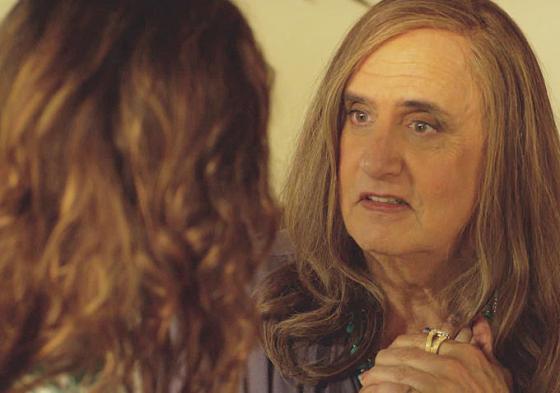
“…It’s not a man coming out as a woman. It is a transgender woman who is coming out. There’s a line in the beginning of the second episode where Jeffrey Tambor’s character, Maura, is talking to her eldest daughter. The daughter asks, “Does this mean you’re going to be dressing up like a woman?” And Maura replies, “My whole life I’ve been dressing up like a man.” That isthe distinguishing reality for trans people…”
(photo from the new Amazon series “Transparent”)
…hated these authors! I mean, never in my life have I been able to enjoy Kerouac, Mailer, Bukowski, Miller, etc.
Each time I tried, I felt filthy dirty…and no, I am not offended by smutty language perse…it was far different than that. I just felt there was something wrong, something off. My heart didn’t sing as I read, it puked.
So anyway, here is the quote:
“For many of these women, the reading experience begins from a place of seething rage. Take Sara Marcus’ initial impression of Jack Kerouac: “I remember putting On the Road down the first time a woman was mentioned. I was just like: ‘Fuck. You.’ I was probably 15 or 16. And over the coming years I realized that it was this canonical work, so I tried to return to it, but every time I was just like, ‘Fuck you.’”
“Tortorici had a similarly visceral reaction to Charles Bukowski: “I will never forget reading Bukowski’s Post Office and feeling so horrible, the way that the narrator describes the thickness of ugly women’s legs. I think it was the first time I felt like a book that I was trying to identify with rejected me. Though I did absorb it, and of course it made me hate my body or whatever.”
“Emily Witt turned to masculine texts to access a sexual language that was absent from books about women, but found herself turned off by their take: “many of the great classic coming-of-age novels about the female experience don’t openly discuss sex,” she says in No Regrets. “I read the ones by men instead, until I was like, ‘I cannot read another passage about masturbation. I can’t. It was like a pile of Kleenex.”
“This isn’t just about the books. When young women read the hyper-masculine literary canon—what Emily Gould calls the “midcentury misogynists,” staffed with the likes of Roth, Mailer, and Miller—their discomfort is punctuated by the knowledge that their male peers are reading these books, identifying with them, and acting out their perspectives and narratives. These writers are celebrated by the society that we live in, even the one who stabbed his wife.
“In No Regrets, Elif Bautman talks about reading Henry Miller for the first time because she had a “serious crush” on a guy who said his were “the best books ever,” and that guy’s real-life recommendation exacerbated her distaste for the fictional. When she read Miller, “I felt so alienated by the books, and then thinking about this guy, and it was so hot and summertime … I just wanted to kill myself. …
“He compared women to soup.””
— In No Regrets, women writers talk about what it was like to read literature’s “midcentury misogynists.”

Trans* Women Are Not Drag Queens — Everyday Feminism.
Constance…yes, it is very early. I cannot sleep. Usually I am good until the dread 3 AM. But tonight sleep is shy and skert of the potential I face for conflict today…
I am meeting with a person who has indicated that he has “great difficulty” with my choice to transition.
Think about that: this is a person I see less than a half hour a day…a person that I run into infrequently in everyday life…and yet somehow knowing that I am transgender is a burden unbearable to him, and the choice to transition is anathema and repulsive to the point that he wants to meet with me, so he can…what?
Tell me I am a freak? Tell me that I should not transition? Tell me to just suck it up and tough it out?
What…does he really think he is more creative, more insistent than my own heart for the last 48 years??? That I have not said these things to me already…and worse?
How does his life change if I transition…and how does it change if I do not (which is too late, by the way…I am never going back. It is Charissa Grace full and free or the grave)?
No…I think what he doesn’t like is that someone whom he knows and assumed many good things about is now acting in ways that are unexpected and unusual…and this is stretching him. It is challenging his lil boxes and tightly drawn lines…it is forcing him to confront things without the luxury of being able to write off the source of the conflict as a monster or immoral pervert…for he knows I am not that.
I ran across this link again today…and I may have posted it once already. No matter…it is a pretty good piece defining things well. I ask that you please read the piece…
…and then give us the chance to be. Please??
Charissa

A Year Later, “Nothing” Has Changed Since Transgender Woman Islan Nettles Was Killed.
*tears*
Constance…I really need your support…we human beings who are transgender need your support. This link documents how we transgendered people are considered essentially sub-human, when we are considered at all.
It can only change as your identification of us as human is made an absolute axiomatic given.
I have sought here, at Grace Notes, to be an educator, a dialogue starter, an exhorter, an encourager…it is my hope that as you read here, listening to my words and feeling my heart, you can get in touch with the life, and verve, and passion, and hurt, and joy, and highs and lows (in other words, the human experience we share in common).
I am incredibly blessed…I am rich beyond compare when I consider my plethora of talents and gifts that have been bestowed on me…and I have a voice here through my writing, an opportunity to speak for those who have no voice, or have no way to express what they feel so all they can d is howl in despair and rage and pain.
But without you, we are nothing, and we count for nothing, and we can do nothing…because we do not have access to the power and privilege that you do.
Please…go read…and remember that each one of those precious souls was created in God’s Image, loved infinitely by God, and is just like you in their hopes, dreams, longings, fears. They might have made different life choices, and we all know that life choices have consequences…but that doesn’t mitigate their worth, value, and significance.
I have been soo incredibly honored by so many of you with your trust, and rewarded beyond belief when someone will comment “my friend Charissa”…thank you!
I would be honored even deeper if you would begin to watch for an opportunity to befriend someone in your area, someone whom They would lead you to…there are a lot of “Charissas” out there…your kindness just might make the different between life and death.
Soo much grateful love…soo much earnest exhortation!
Charissa
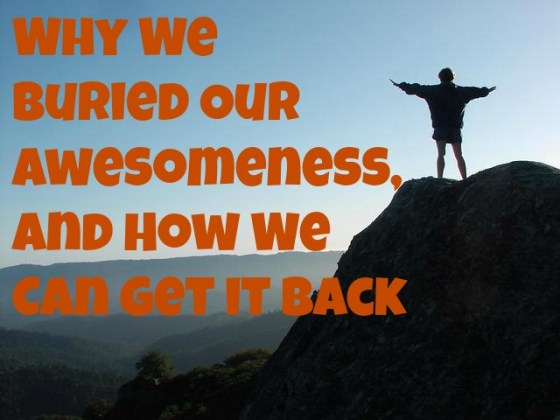
Why We Buried Our Awesomeness, and How We Can Get It Back – Dara Hoffman-Fox.
Constance…I cannot even begin to tell you how thrilled I am to have made a new friend in Dara…I have admired them from afar for just about a year, and somehow knew that we would connect and work together? Well, that connection has sparked and birthed…now we feed and let it grow.
In the meantime, I want to draw your attn to their blog and their fab writing. It really applies to all who would read it and dare to press in…I think that is what faith is, right?Pressing into what we know to be true instead of hanging back in what we fear is true.
Anyway, go check out Dara’s article…they’re a Champeen!!
Love, Charissa
Transgender People Can Explain Why Women Don’t Advance at Work | New Republic.
ABSOLUTELY fascinating!
Constance…this is sort of what I was driving at in the post about Nationalism…our assumptions, our blinders, our pride…cause us to miss truth, and even worse The Truth.
Read and ponder
White Privilege Doesn’t Mean What You Think it Means | Kristen Howerton.
Constance, this one will appear before the other two articles I recently pressed…so the same exhortation I made there applies here…
…simply Go. Read. Act.
Charissa

Explaining White Privilege to a Broke White Person | Gina Crosley-Corcoran.
Another very well written and informative explanation of privilege…please check it out. If you, as I once was , are blind to the ways your skin color or your gender status or your monetary status give you special access to good things and special protection from bad things, then take it from me in faith who once was as you but now can see…
…the consideration of these persuasive words is essential for anyone who desires to live the best expression of justice, mercy and humility that they can.
And as always, I am grateful and humbled that you come here and spend your time!
Love, Charissa

“But the most insidious power of white privilege, the albatross effect that makes it so oppressive to white people themselves, is the way it renders itself invisible and clouds the collective mind. It’s like a virus that adapts in order to ensure its own survival and perpetuation, in this case by convincing its host it isn’t there.”
via White privilege: An insidious virus that’s eating America from within – Salon.com.
Constance…go. Read.
But before you do, allow me to comment that there is a direct analogy to cis-gender privilege.
I am in a pretty unique position to make this statement. Here is why:
Up until last March, when the scales fell from my eyes about my own true nature and the disintegrated state of my being, on a slow boat to death and no better prospect, I was completely blind to all forms of privilege I was granted due to the circumstances of my biological body, my skin color, and my socio-economic strata.
I would have sworn on a stack of bibles that I had no privilege. Being “male”? A huge burden! (in my case, this was sublimation, lol, but the point still holds). Being white? Big deal, I get no affirmative action…etc. etc. etc.!!
I was totally and completely wrong…cuz I was totally and completely blind to these things. The oppressive effect of privilege which conceals itself from its host is such a powerful concept.
It wasn’t until my eyes were opened that I had any awareness, let alone interest in affecting lasting change. But now? This cannot stand. I cannot call myself one who seeks justice and loves mercy and walks humbly if I do not eschew privilege and seek to liberate my neighbor as a profound act of love.
This is why I am always exhorting you, Constance, if you are cis, to be continually educating yourself, asking for eyes to see, and then taking the courage of your convictions and putting them into action.
Shine on, eyes steady and heart even steadier!
Charissa Grace

Okay Constance…I am gonna confess a lil indulgence of ego: I really like my new poem “Her Door, Her Red Door“, and frankly I am a little disappointed there have not been very many likes on it…but I am also not surprised for it is inference, symbol, veil, subtly blatant while blatantly subtle…
I actually and for real think it is one of my most skillful poems to date.
But I get that it is not necessarily appealing…but consider, if you would, the poem itself in the context of the work of the poet: I once said “The poet is a desperater man than most. He must get it all down before the ages are up. Which, as any poet will tell you Is A BITCH!” (waaay back in 1982)…
…I was trying to say that there is a “job” in poetry, or perhaps a better word is quest? No matter…if you consider yourself a poet (and I do) then you find this inability to see life as any other thing but a poem and events/circumstances/happenings are all snapshots into the heart of the poem.
Thus, when I write I try to emulate the layers, hidden and revealed, that comprise this Mystery we swim in.
In “Her Door, Her Red Door“, you find me operating on a few very intentional levels…I do not want to just lay it out there. That is a bit too clinical, sort of like the difference between sex education class in Middle School Health class, and the wonder and poignant pain of Love’s First Kiss. But I do want you to have some sense of the structure, the themes and the interplay of them. I can be obtuse…lol.
First of all, consider that it is a poem written by a trans-gender woman who is in the midst of transition. This overall context puts the other elements in perspective and frames the picture.
Secondly, it is a poem dedicated to a person whom I have openly spoken of and the role she has in my life. That role has permutations and multiple facets when considered poetically. What is her “business” with me? What is mine with her? What is our mutual end? And more fundamentally, Constance, what is your position in all this as well? Are you somehow about the same things, in the salient areas of becoming that you face?
Next comes the unfolding of my view of our essential business: becoming. She is a facilitator of mine, and as I participate in her provisions I aid hers as well…and each of you, as you become day to day, may perhaps find touchstones in this poem’s point of view and approach to that becoming. You will, of course, have to make inference and feel your way under the sheet to the true bones of your own transitions in this life as a sentient, conscious being stuck between the macrocosm and the microcosm infinities, and with eyes…
I choose a physical aspect of her and invest that with meaning far other than the expected trope culturally in our pornography laced times…there are only three capital letters used in this poem. That is on purpose.
There are obvious references to musicians…why specific ones? Why them? What are the specific characteristics of those humans? (Remember to ask this inside the “frame” of the picture I mentioned earlier). There are single words that link back to lyrics, and those lyrics in turn echo back the essential business of this magic woman, which echo back to my own quest of becoming.
There are many puns laced throughout, intentionally slanted in relation to the core…that way they can make the connection and then…like leaves in early autumn, gracefully drop away once their purpose for the tree is completed, and reveal the strong and vital branches of the tree beneath that leafy veil…
The door: resist the temptation to skim over this, thinking it is obvious…no? Perhaps, like usual with me, it is a sonar reading on a larger diamond lurking in the dark of unknown knowns…but if you will try, you may very well enjoy letting those things bubble up inside you…from your heart.
Lastly, and remember that I have said before that wine and the process of creating it is for me the central metaphor of the universe, think about the poem again, in entirety (which means you can reinterpret the words on the 4 layers of existential being: physical, mental, emotional, spiritual)…and once you have that palate built? Start to pull elements from one read through, and combine them with elements of the other…sensual elements mixed with sacred elements…becoming and unbecoming mixed with living and dying…
…and always, always: Communion. Bread…Wine…in the presence of knowing knowers broken and shared.
We are given our birth…but we have to achieve our being, and enter in.
I hope these clues assist you into at least understanding why I am so proud of this one. It was “easy hard” to write down and weave, and it tested my limits at this stage of my becoming…as a poetess, as a prophetess, as a woman, and as a lover of God.
In heartfelt passion,
Charissa Grace

Sooo…I admit it, my love of story, my insatiable curiosity about people…ever always “under Solomon’s sun” and also ever always surprising…and thus I watch a lot of TV. Now, I DVR things so I can fast forward thru the commercials (hated since I was just over 3 years old), and I delete quickly as well…but most things I will at least check out (except for the “dead body shows”…the ones that seem to delight in shoving dead and dissected corpses in my face as they figure out over and over again the same culprit to the same crime (only the names have been changed to charm the innocent and dull the naive).
I checked out Outlander.
See, an acquaintance is wild about all things Gabaldon, and passion by people that I respect draws my interest to the object (or subject) of their passion.
So…as tv series go, it is well done. Far more salacious than I expected, not that I am offended. Rather, I think the same things could have been said stronger and more powerfully sans the curtains pulled back and the mystery demystified in the light of Solomon’s sun. That aside, the story is wonderful…far better and treated more seriously than the movie Outlander a long time ago.
My friend would have a far more informed perspective regarding the fidelity of series and book…I just found myself drawn into the drama…
…and particularly taken with the plight of the heroine…waking up conscious in a time not her own with no way back home.
If you enjoy this so far, please chime in on the comments, I would love to hear more.

Trans community can change minds by changing discourse – LA Times.
Oh Constance, I Love this article!!
It has a very similar p.o.v. to what/how/who I feel called to be and the manner in which I desire to influence and educate those people in my life who are most central to the overturning of an insufficient paradigm of bondage (the gender binary) and a harsh cruel paradigm of patriarchal privilege that enslaves both men and women.
To walk, my head held high, my inner self shining thru this shell like light thru a stained glass window…to be gracious in the face of ignorance and courageous in the face of misogyny…compassionate to the face of brokenness and kind to the face of need..to be resolute in the face of hatred and forgiving in the face of repentance.
Whew! That is a tall order…but then again, my Mama is pretty tall…besides, it is the heart and soul of why I took the name Charissa Grace.
Check out the article, and then join my legions in the armies of Grace!
Love, Charissa
My Son Wears Dresses and That’s OK With Me | xoJane.
Hi Constance…pretty sure I pressed this already? But just in case I didn’t, here it is again.
Mama, please bless this father…a true confident and faithful man, who refused to be his child’s first bully.
Love, Charissa



Constance, we see the results of depression brought home to us in the recent tragic death of well known public figure Robin Williams. But what about the ones no one knows, around you? Many of my friends have brought forth stories of relatives, acquaintences who succombed to its deadly siren song of release that is only a final tragic dissolution.
And, even more poignant, simply because of numbers and a vital extra lil addition of pure hate, is the plague of suicide that rests like a curse upon the shoulders of transgender people. There is a post that says it well over at the blog The Girl Inside…you can check out the full thing there:
http://www.thegirlinside.com/tg/in-requium/
Let me quote a startling paragraph or two:
It is certainly well known within our community how prevalent the attempted suicide is among our brothers and sisters who are transgender. The most recent and best survey on the subject reports that 41% of surviving trans people surveyed reported having attempted to take their own life, and there’s no accounting for those who not only attempted and succeeded in that figure. This in contrast to a rate among the general population .under 5%. Certainly compared to almost any demographic you might imagine, we relate to the phenomena of suicide. It is hardly possible to offer any new argument that has not already been offered as to why we should struggle against that temptation and not give into it, but more so it is perhaps adds a certain obligation to those of us who survive.
It is well understood by those who study such things that the incidents of actual psychological disorder among trans people (of the sort Williams may well have struggled against) is not significantly higher than in other populations but what is, is the sort of “environmental” depression that arises from the circumstances of your situation. Which is to say that when you know you are a member of a reviled community, one who is quite possibly going to be rejected by everyone you might reasonably expect to love you if they knew the reality of your heart and mind then you are prone to depression even to the point of suicide.
It is not enough that we resist giving in to temptation, rather it is incumbent upon us to step out of the darkness and into the light and challenge our society to build a culture that does not reject us for who we are.
As long as they are allowed to shame us, reviled was, and mock us then we will continue to bury members of our community who took their own lives.
Enough of that.
Well? Constance?
Mental illness rates, psychological rates virtually identical, and yet 41 % of trans individuals have already attempted suicide? I have heard stats that the general population’s suicide attempt rate is somewhere between 2 and 3 %.
How is this not blaring news? If 41% of all middle schoolers were attempting suicide, or of all females were attempting suicide, imagine the furor.
But trans-individuals? Nah…tragic waste of a good man/woman in the first place, and thus they deserve what they get…right??
At ease in Zion…how does that taste?
Join me as an ally of transformation, and make your wealth rain down like spring rain.

Why Do We Need Labels Like “Gay”, “Bi”, “Trans”, and “Cis”?.
Wowsa…Constance, this is a long, well thought out, and somewhat complex article on the necessity for words to describe our experiences…and also how power segments of our culture control words, define the ones allowed and the ones that will be known as “labels” and thus verboten.
The complexity lies in the need to keep a few ideas simultaneously in mind as you read, and to patiently assimilate the foundational things at the beginning to roll with understanding at the end.
Please…roll up your sleeves and give it a go. It will greatly assist you in having a greater connection to my life experience, and more effectively equip you to be a tower of kindness and compassion to those you meet each day, especially trans-folks.
Love, Charissa
 (pic by Charissa Grace)
Transgender Violence Is a #YesAllWomen Issue | The Nation.
Constance.
Please.
Read this. Sorrowfully, sadly, I confess…before I came home to myself as who I am…a transwoman redeemed, I blindly and unconsciously participated as an oppressor in this issue. <sob>
I am sooo sorry, Sisters…never again. Ever.
And now, to find myself near the bottom of the power pyramid, by choice and never happier…the irony is rich, and radicalizing.
Teaser quote:
“All women are subject to the threat of violence when they exert agency over their own bodies, defying the expectations of men. For trans women, this agency also takes the form of choosing to express their true gender in public. They act against society’s expectations, especially those of men who feel they are entitled to define trans women’s gender. When trans women attract men, they anger those same men who cannot accept their attraction to a woman who was assigned male identity at birth. Because of this, trans women become the targets of violence…
“Like women who are held responsible for being raped because of their dress or demeanor, trans women are also blamed for presenting themselves according to their true gender. Like other women, trans women are accused of deceiving men, and their histories are used to justify violence against them…
“Understanding trans violence as a women’s issue benefits both the trans and women’s movements. It allows trans women to connect their struggles with a broader and more extensive history. But more important, it also deepens our understanding of the struggles of all women, highlighting the lengths men are willing to go to in order to preserve their control over our bodies. It is only when women achieve equality, successfully battling against male entitlement, that trans women will no longer pose a threat to this social system. Trans women’s rights therefore serve as an ideal barometer for women’s rights in general.”
#YesAllWomen in the wake of Elliot Rodger: Why it’s so hard for men to recognize misogyny..
Constance…this is a must read to understand the current climate of spiritual being inhabited by the human race.
Each of us is living in this prison!
Women, who suffer as inmates…
…and men, who are born little boys, and socialized into jailers, and thus inmates as well…
…and the rest of us, on that continuum and without territory, the cleaner of latrines and the off-scourings of both or either.
If you read here for the poetry, consider this post to be talking of that entity that strikes at Poetry’s Heart, that malice, spite, hatred, rage, “anti-life black hole” gawping hungry and ravening, raving in rage against the light. You need to find your way to your compass, and follow it to that way of being that is in the land Beyond and whole…
If you read here for the spiritual orientation, consider this post in light of Paul’s great rejection of privilege and station in Galatians: “For in Christ, there is neither slave nor free, greek nor jew, male nor female…” Paul was not teaching that there is no gender or nationality or station in life, but rather, he was pointing out that Jesus has united us all in a land of freedom where there are no more jails, no more jailers, no more inmates. All have equal worth, value, and significance, whose limit is defined by the price paid to purchase all things…and you simply have no other option than to find the courage of your convictions, leave the safety of the “bus-stop of evangelism and the 4 spiritual laws”, and strike out boldly into the territories waiting for your courage, your faith and resolve, and most of all, your love oozing and dripping from your heart instead of the very blood of the monster that enslaves this world and us by proxy to the degree that we do not speak out, live out our words and embody in our beings the very law of liberty!
If you read here for the perspective of a transgender person in a binary world view, for my own outrage and bucking against an entire construct of ancient evil birthed in rebellion and ego, then take stock of your own station and participation in this concentration camp culture and way of being…
…start bucking. Kicking. In that way which is right for you to do, for some have hooves, some wings, some words and some deeds…
Above all, find that radical action which transcends revolutionary overthrow and effects true change of being, essence and substance, and does not simply burn out in tiredness and cynicism or become co-opted in its strength and potency by consumerism which simply re-packages genuine action into the latest consumer product and trend.
Blessings of uneasiness and no peace until you confront yourself in this gaol…
Charissa Grace, circumspect and sober of spirit.
(small quote from the entire article to whet your appetite:
“These are forms of male aggression that only women see. But even when men are afforded a front seat to harassment, they don’t always have the correct vantage point for recognizing the subtlety of its operation. Four years before the murders, I was sitting in a bar in Washington, D.C. with a male friend. Another young woman was alone at the bar when an older man scooted next to her. He was aggressive, wasted, and sitting too close, but she smiled curtly at his ramblings and laughed softly at his jokes as she patiently downed her drink. “Why is she humoring him?” my friend asked me. “You would never do that.” I was too embarrassed to say: “Because he looks scary” and ‘I do it all the time.’ “)

Constance, this is a very good report by a person helping families understand and help their transgender children just as they would their cis-gender kids.
It does a marvelous job of highlighting how being transgender strikes across class, race, creed, religious, political, cultural and historical boundaries.
May it assist you, and contribute to your courage to speak up and speak out on behalf of transgender people in your lives: the ones you know…and the ones you don’t!
Love, Charissa
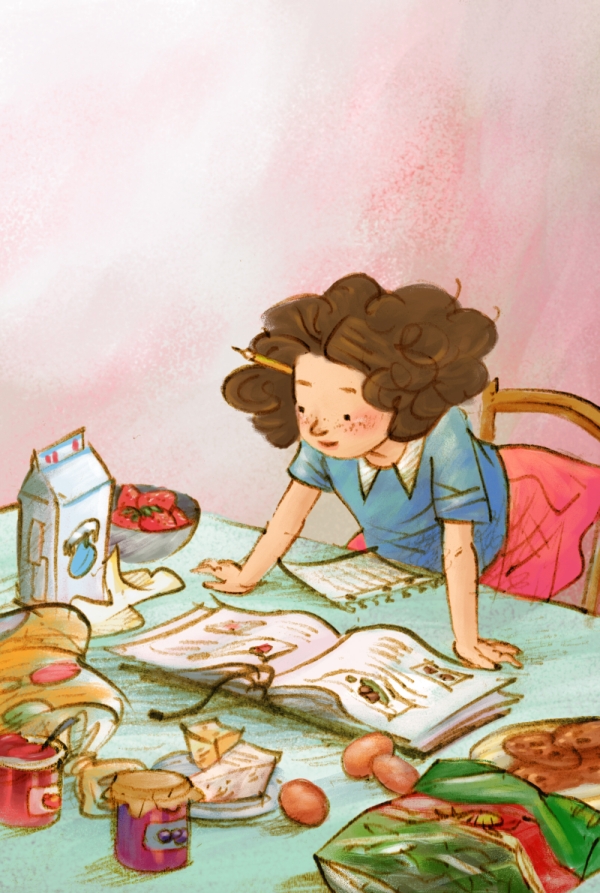
G’morning Constance…I love to cook. I love to get in the kitchen and start letting ingredients come together and meld, mingle, and metamorphose into something completely different.
My cooking is sooo much better these days…now that I know myself. I have wondered why. And perhaps this quote, from Chef Jacques Pépin sheds some light on the subject…and it makes me wonder: if every day is a dish to be prepared, are you including the crucial ingredient?
And as a poet, I think the metaphor holds very well…check out the quote, and make a gourmet day out of today!
Love, Charissa
“I have asked friends many times, “What are the best fundamental dishes of your life?” Invariably, their response goes back to food prepared by a mother, a grandmother, a father, an aunt, or some other relative or friend. A main ingredient of those preparations is the love with which they are prepared. Those early tastes remain with you for the rest of your life.
“The Chinese philosopher Lin Yutang said that patriotism is nothing more than the love of dishes you had as a child. Certainly, in times of stress you go back to the essential dishes of your youth. As those young soldiers in Afghanistan would certainly agree, Mom’s apple pie, Boston baked beans, or a lobster roll are among the dishes they crave or dream about.
“In Love in the Time of Cholera by Gabriel García Márquez, the book’s main protagonist, Dr. Urbino, doesn’t know anything about cooking, but when he eats and entertains in his home, he equates the goodness of the food with how much love was put into the dish. He would reject a dish, saying, “this food was cooked without love.” It is a criticism that is closer to the truth than most people realize.
“Julia Child used to say that you have to be happy when you cook for the food to be good, and you also have to be happy in the eating and sharing of the food with family and friends. Otherwise the gastric juices will not do their job and you won’t digest the food properly. I agree with her assessment. It is impossible to enjoy food when you’re angry and tense.”
Hi Constance…I am still on slow burn from this morning’s disheartening news…but this article covers several good points regarding what not to do or say when you encounter a person who is different than you. She writes of the LGTBQ community…but I find these ideas extremely applicable under any circumstance with anyone.
Blessings to you, and grace to have courage!!
Charissa

July 14, 2014 by Erin Tatum
LGBTQ folks have to put up with a lot of ignorance.
One of the most obnoxious forms of said ignorance comes in the form of identity policing, which often manifests as other people providing “theories” to explain your sexuality.
These microaggressions can ruin your day and even erode your confidence about your identity. A microaggression is a small, intentional or unintentional statement or action that is often repeated, to the point where the person experiencing them feels worn down or attacked.
Microaggressions occur in everyday environments, and as their name implies, they often go unnoticed and easily accumulate.
Identity policing certainly falls under the umbrella of microaggressions. When someone makes an assumption about an identity that isn’t theirs, particularly in regard to sexuality, it comes off as interrogating the other person’s self-perception, with the implication that their understanding is somehow flawed or inferior.
Being queer means that people who aren’t in your community always feel entitled to an explanation or worse – they think they know better.
Let’s explore how ridiculous this notion is by going through the various incarnations of queer identity police.
I always cringe internally whenever anyone outside of my queer bubble brings up anything that would give away my sexuality. Not because I have any problem with my orientation or because I fear rejection, but because I’m never in the mood to go through the inevitable point-by-point analysis to justify how I identify.
Whether you’re coming out for the first time or simply mentioned your sexuality offhand, the obligation to explain your queerness to someone outside your community is cumbersome and irritating.
This is doubly true with cis and/or straight people, who always play the role of heteronormative defense lawyer, no matter how genuinely curious or non-queerphobic they claim to be.
They expect you to lug around your mental briefcase of citations, detailing when you first felt the way you did and when your first experience was and all the times you felt “not normal” since you were a fetus–bonus points for self-loathing or anything that sounds like they may have heard it in a Macklemore song!
Apparently, you can’t be queer without having enough history and credentials to fill an encyclopedia. After all, you’re clearly just craving their approval and validation, right?
As a woman who has considered herself bi/pansexual with leanings towards ladies for several years, I’ve frequently tried to convince myself that I’m actually a lesbian because people understand that so much better than “I realized I don’t really consider gender as a defining factor in who I’m attracted to.”
That’s right, I was allowing any skeptical rando to gerrymander my orientation into something that it wasn’t. I paradoxically used everyone else’s reactions as a barometer for how I ought to define myself.
No one owes you an explanation of their gender or orientation.
Conversely, if you don’t understand someone’s gender or sexuality and you don’t recognize it as legitimate, that doesn’t mean you can pretend it doesn’t exist.
Then there’s the next level of intrusive – people who think that they have all the answers to your identity. You can say almost anything about your gender or orientation and they’ll always have an objection or a suggestion.
Sometimes these comments are benevolent; sometimes they’re offensive. They range from stereotypical (“you’re bisexual so you must be obsessed with sex”) to just flat out rude (“you’re asexual so you must’ve been though trauma”).
People also have an impulse to conflate gender or gender presentation with sexuality, when in reality there may not be any correlation. For example, straight trans* individuals are frequently accused of pretending to identify as a different gender to avoid the pressure of being gay.
Newsflash: Although it may be tempting, it’s time to take off the Sherlock Holmes hat. If someone you know identifies as queer, it’s not a gateway to interrogate them.
People who are in the majority can go through life with their identities unquestioned. Even if the majority person is well intentioned, the marginalized person should not be forced to jump through hoops to educate or cater to the status quo.
Beyond that, it’s incredibly insensitive to steamroll someone else’s already hard-won identity with your own opinion just because you think your perspective is superior to or more sophisticated than theirs.
Gender and sexuality is not a fun whodunnit mystery or an opportunity to show off your liberalism or level of education. You don’t have to insist on creating a rationale for every piece of the puzzle.
Frankly, queer people couldn’t care less about your analysis.
Perhaps the most galling is queer people who have the audacity to question or put down the identities of other queer people. Really? Just… really?
We face so much prejudice already, you’d think more of us would have the good sense to respect everyone’s autonomy to define their own identities.
Given that so many outside of our community preach to us about how we are or how we should be, it’s unfortunate that we sometimes treat others with the same scrutiny and skepticism.
The LGBTQ community has been derided as all about the LG with only a reluctant willingness to acknowledge the BTQ, which regrettably holds true too often.
Bisexual and trans* individuals are thus more inclined to be subjected to a volley of “interpretations” – often thinly veiled insults or discrimination – from fellow queer people.
Unfortunate confirmations of this include the alarming consensus that bisexuals are promiscuous or untrustworthy, or that being trans* is a trend that’s now perceived as merely an evolution from being gay.
There seems to be a bias in every subset queer community against just about everyone. Drawing briefly from my own experiences with queer women, feminine women routinely face objectification and misogyny, while others scoff that masculine-identified women “aren’t real women.” You just can’t win.
So, why do we feel the need to cut each other down? By questioning the legitimacy of someone else’s queer identity, Group X asserts that their identity is superior to Group Y, therefore implying that their identity is more respectable.
A hierarchy of authenticity soon forms as everyone works to reaffirm their superiority in the imaginary battle to determine what the best type of queer is.
Here’s a secret: there isn’t one! There’s no manual or checklist on how to get the most queer brownie points.
Queerness is yours to explore however you want and we should all embrace that rather than inexplicably recycle asinine heteronormative policing.
If you’re queer and you feel the need to inform another queer person of how you think their identity works, think about how irritating you would find the same behavior if it came from a straight/cis person. You wouldn’t like it, so don’t inflict it on someone else.
It may sound like a kindergarten lesson, but it bears repeating: treat everyone with respect. If what they’re doing isn’t hurting you, leave them alone and let them do their thing.
It takes a lot of determination and passion and confidence for many people to be queer. Queerness obviously has a complex and often tumultuous history. Turning it into a platform for your own monologue or a silly game of 20 Questions for the sake of giggling at your own knowledge demonstrates an unbelievable disregard for the person’s journey.
Queer experiences are crucial. They constitute the cornerstone of our understanding of ourselves as individuals and our community in a broader sense.
Queerness usually involves a great deal of reflection and introspection, so don’t pretend you know our sexuality better than we do because you took one gender studies course or watched a documentary.
At the end of the day, your theory amounts to little more than white noise.
The integrity of our experiences and identities will never fail to transcend your “theories.”
Hi Constance…I found a cool article about yet another parent who has the vision, courage and love to raise her transgender daughter with love, acceptance, and support.
She made a statement in her article, and it so resonated with me, because I remember that fateful late March afternoon just last year (!!!)…after extensive reading about transgender people and lives…I was so lonely, and so separated from everyone and everything. Surrounded by people who loved me, but not me me…just who I posed as for their security and happiness, and yet I felt totally alone.
I was worthless. I had no meaning. They had actively and intentionally sought me, found me and time and again healed and sustained me…and I still just wanted to disappear.
And on that day, rain drizzling coldly outside, heaters ticking and popping, I read of the loneliness and alienation of my trans sisters and brothers…and I was soo struck by how their stories jibed with mine, how people whom I had never met wrote as if they were inside my head! My compassion welled up, and I wept for them, because I truly knew what they were suffering…and then the stories of the people who decided to transition instead of kill themselves, and such a longing consumed me…a longing to feel something normal, a longing to be “right”, a longing to know I belonged to someplace…
…belonged to myself…
and then I heard Mama say to me in my heart, that if I was totally honest with myself, I would see that I too was transgender, just like the ones I was reading of.
And that is where the statement that Julie Ross makes came out of my mouth…”No Lord…that happens to other people, but not me. I mean, I have always thought I was a girl trapped in this male body with no way out, but that doesn’t make me transgender! lol!
But She persisted, and besides…I knew, right then that she was right. All that had to be dealt with was the constructs of immorality and perversion that had been formed in my mind and heart due to the childhood experiences I went through.
All of that is going to be avoided for Julie’s lovely daughter! She will still have trials, and heartache like every human in this shattered world…but she will never feel the emptiness, the horror of nothingness where there ought to be life.
May Mama shine on each of our hearts with Her convicting love that upholds us, sustains us, and washes us everyday…and may we find the courage to go out of our way to ease the journey of someone else today.
Much love and rejoicing, Charissa

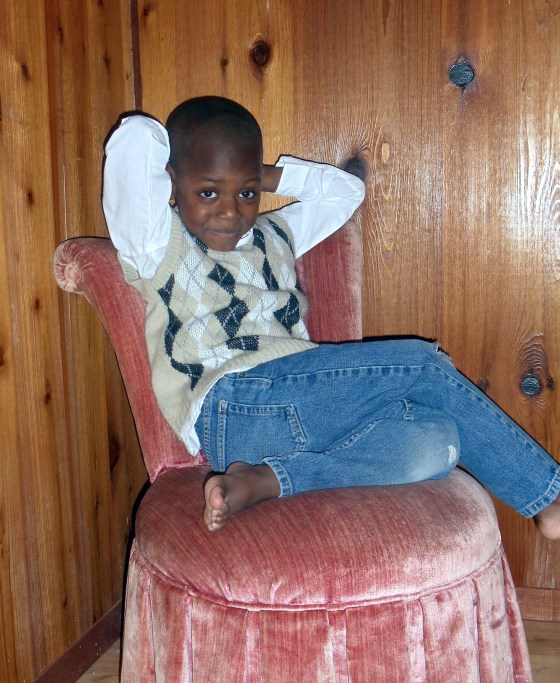
Eight months ago, my 9-year-old son tearfully shared with me that “his whole life, he had wanted to be a girl”. Pressed by the therapist (who, thank G-d, was in the room with us) to clarify whether he wants to be a girl or is a girl, George immediately replied that he is a girl. And so began a crazy-ass adventure that I never, in a million years, expected to find my child or, frankly, myself, on.
To be clear, my husband Rich and I always knew that George (who is now Jessie) was different from not only our older son, but from other kids — male and female alike. With sparkling eyes and a wildly observant and funny personality, he was known by everyone everywhere we went. Never one to shy away from a conversation or situation (particularly if it involved dolls, dresses, wigs or mermaid tails), he captured the attention of anyone he came into contact with. When behaviors that concerned us in preschool and kindergarten — including, but by no means limited to his self portraits (a frequent drawing assignment) consistently depicting a girl in a dress with long, flowing hair — continued with even greater vigor in first, second and third grades. We concluded that he was probably going to grow up to be gay, yet didn’t quite buy it ourselves. He was a boy who greatly appreciated a beautiful girl and what she was wearing. He never met a doll, wig, dress or mermaid tail that he didn’t feel a total compulsion to own — no matter how strongly he had to fight for it. And despite the fact that he was not even slightly effeminate, there were several occasions that he harassed and harangued me for hours on end requesting everything from hair extensions to wigs to dolls. It never added up. And then he asked for (and by “asked for” I mean “demanded”) a pierced ear.
Our initial reaction to the earring request was that “little boys don’t wear earrings”, but he was having none of it. As he obsessively pursued this request, it became increasingly clear that it was not a desire, but a need. Since growing out his traditional little boy haircut was going to take some serious time (we had agreed to allow him to grow his hair — anything to stop hearing about hair extensions or wigs), a single pierced ear seemed an easy enough allowance in hopes of placating him. Of significant note was, just prior (and I mean as the alcohol was being rubbed across his lobe) to the piercing, he implored the piercer to be sure to do it in the ear that doesn’t mean “gay”… clearly he was building up the courage to tell us something, we just didn’t know it yet.
It was not long after the newly-pierced ear that our confusion was put to rest and we were told of George’s truth. It took me about a minute and a half to absorb what he was saying and to give myself a virtual whack upside the head. It all started to make sense now, except for the part when I told myself that this happens to other families — not mine. Wrong.
We continued along with our “if-it-was-ever-normal-it-isn’t-now” lives for a few weeks, noticing a huge change in our child’s mood and temperament. Clearly, an enormous weight had been lifted. And then there came what we refer to as “the article”. It was a Sunday in December, which also happened to be George’s tenth birthday. On the front page of The Boston Globe there was an article about identical twin boys, one of whom had identified as transgender and was now living fully as a girl. I, not surprisingly, was raptly reading the story when George came up behind me, noticed the photo and asked who they were. Upon telling him he responded, with his mouth agape, “You mean I’m not the only one?” It was at that moment that Jessie was born, moved in and has since made herself comfortable in my house.
The following day, I dropped George off at school and told him to be cool; we would come up with a plan. He was cool. Until 11 a.m. (not bad considering the school day starts at 8 a.m.), when he simply could not keep the truth to himself and, without fanfare or drama, told one of his teachers about his “secret”. The cat, ladies and gentlemen, was out of the bag. The next day, as it happened, was pajama day and, after a hasty, late night trip to Target, I successfully outfitted my “son” in head-to-toe pink, purple and green polka dotted pajamas in which he ran (not walked) into school with zero hesitation and without so much as a glance over his shoulder for support. Jessie had been waiting her whole life for this day. I almost wonder if that was why she felt the need to share when she did… just to ensure the perfect little girl pajama ensemble for what will likely (hopefully) be her last school sanctioned pajama day ever.
Since those first crazy days, we have had her second ear pierced and have had countless meetings, discussions, questions, plans and concerns hurled in our direction. At times we have laid low: mostly at the beginning, when we were nearly immobilized by the mere thought of what it meant to have a transgender child. Other times we have been “out there”: when, for example, we announced on Facebook (with her encouragement) “George becoming Jessie”, complete with a photo of her in her inaugural dress. This was a means of survival for us and done mainly so that we weren’t forced to explain the situation to everyone, everywhere, every time we left the house. But no matter how people learned of Jessie having identified as transgender, the response has been consistent: total acceptance with a healthy and appropriate dose of trepidation — both for us and, frankly, themselves.
Our family has been lucky. We know that we are just getting started, but are grateful that Jessie’s social transition, thus far, has been as seamless as we ever could have hoped for. She has that sparkle in her eye and a new confidence which is the envy of many an adult. We take each day as it comes and have as little an idea as to where this will land as we did eight months ago… but at least now her self-portraits make more sense.
PS: At this point, it is noteworthy to tell you that it felt strange to refer to my child as George or to call her a “he”. “New normal” surprises me every day…
The Doctrine of Trans, Part 2.
Good Morning Constance…Part 2 from Trans-girl at the Cross.
Prolly of interest only to my readers who are Christian, but even if you aren’t it is worth a look, for it gives some insight into the subtlety of biblical interpretation, and the importance of letting the text speak for God instead of the reader reading her own opinions into the text and then taking the name of the Lord vainly by claiming that God has said something He has not said.
Praying that Lady Grace prevails in the hearts of the Church, and that a place for all LGTBQ people is warmly secured at the table of Their Communion and Fellowship,
Charissa

The movie…
So, Constance, I am not at all a Jack Nicholson fan…if you have read here long I am certain that would not be a surprise! LOL!
I am also not a Helen Hunt fan…nothing at all like how I feel regarding Jack Nicholson, I just never clicked with her, or her movies. She did a movie in our town, when she was just a girl, and that whole phenomenon was interesting, but…meh.
In spite of that, I have loved the movie “As Good As It Gets” since the day it was released.
I have watched this movie at least 5 times, and maybe more…it is 17 years old!!
For me to watch a movie more times than once, it has to be special to me, and there are films I regularly re-watch. But I cannot predict them, or decide. Some are just calling to me over and over, and most never do. The Sound of Music…My Fair Lady…Music Man…Clint Eastwood movies (only some)…Babette’s Feast…The Fisher King…and some others.
But this one, well, it is just impossible for me to not watch it when it is on, and I have never ever been able to figure out why I like it so.
Until this year.
I recorded it onto the DVR about a month ago, and decided to save it and watch it first thing, early in the morning on my birthday, alone while my darling slept. And this year…I finally got it.
It’s theme is redemption, transformation, transition, and love and grace win the day over alienation and loneliness.
Usually there is a character I relate to, and I know it. But in this movie, until just now, I didn’t know which character I related to cus I disliked them all (while loving their journey and blooming)…
But this year? I get it.
It is Carol the waitress…she is me.
It is Simon the artist…he is me.
It is Melvin the writer…he is me.
Plus it has Van Morrison music!
As Good As It Gets…there is a never ending never running out supply of good, when we allow ourselves to connect and love, and receive and give…
…and above all, just accept others.
I think it is a living parable that speaks out Micah 6:8.
Thanks to all the creators of this amazing piece of art…I am ever in your debt.
Love, Charissa

Good morning Constance…I ran across an old interview with Jennifer Knapp, a singer-songwriter who has come out regarding being a lesbian who loves God intensely and has no intentions of turning away simply because the Church has turned away from her.
That is shameful…the shunning that goes on in the name of “Righteousness” sickens me and makes me feel so dehumanized and denigrated…more for the shunners than for myself!
What an awful surprise they will have when Jesus keeps His promise, to measure out to them in with the same measure that they measured out to their brothers and sisters.
Anyway, Jennifer said it well, so here is a small snippet for your edification and exhortation:
“… But if you remove the social problem that homosexuality brings to the church—and the debate as to whether or not it should be called a “struggle,” because there are proponents on both sides—you remove the notion that I am living my life with a great deal of joy. It never occurred to me that I was in something that should be labeled as a “struggle.” The struggle I’ve had has been with the church, acknowledging me as a human being, trying to live the spiritual life that I’ve been called to, in whatever ramshackled, broken, frustrated way that I’ve always approached my faith. I still consider my hope to be a whole human being, to be a person of love and grace. So it’s difficult for me to say that I’ve struggled within myself, because I haven’t. I’ve struggled with other people. I’ve struggled with what that means in my own faith. I have struggled with how that perception of me will affect the way I feel about myself.”

Hi Constance…I am recovering nicely after yesterday’s very difficult day, thanks for asking! 🙂 Writing those poems helped some, getting those feelings out there so I could see them, and somehow wrestle my own self into a somewhat numb place, to endure.
For anyone reading this who isn’t susceptible to the assault that feelings can be on your heart, think heavy rainstorm: you can walk around in it with regular clothes, or you can dress in rain-gear and an umbrella…but you cannot make it stop raining. It will stop when it stops.
Anyway…I am re-posting an article that I thought was very educational about gender dynamics and socialization in our culture…please read it and follow the numerous links for a pretty good layout of the issues.
But here is why I am re-blogging this: I am wondering, as a daughter of Lady Grace and child of The Father and sister to my older Brother Jesus, what should my speech dynamics and content look like? This question popped into my lil hamster brain and has been running on the wheel ever since.
I do believe that even a cursory search of the New Testament will give plenty of raw material directed at speech and conduct that is gender-neutral, and is directed at looking after yourself first instead of correcting and policing others in their behaviour according to your own pet view of what these verses say and mean.
It always does a ton of good to bite your tongue, literally if need be, before you utter one negative or harsh word to someone else. First, walk an entire week practicing the very thing you wish to lay on someone else. Second, read about beams and sawdust specks in the Sermon on the Mount. Third, walk another week practicing the thing that caught your attention. And then, lastly, finally let it dawn on you that Lady Grace was prompting you on the very thing you projected onto someone else.
You will then be so sweet that people will be drawn to you like bees to a sweet flower, and they will ask you for input.
Just some thoughts from Charissa Grace…now read on for far more erudite and informed ones!
Love, Charissa


This article updated from original, which appeared in Role Reboot.
“Stop interrupting me.”
“I just said that.”
“No explanation needed.”
In fifth grade, I won the school courtesy prize. In other words, I won an award for being polite. My brother, on the other hand, was considered the class comedian. We were very typically socialized as a “young lady” and a “boy being a boy.” Globally, childhood politeness lessons are gender asymmetrical. We socialize girls to take turns, listen more carefully, not curse and resist interrupting in ways we do not expect boys to. Put another way, we generally teach girls subservient habits and boys to exercise dominance.
I routinely find myself in mixed-gender environments (life) where men interrupt me. Now that I’ve decided to try and keep track, just out of curiosity, it’s quite amazing how often it happens. It’s particularly pronounced when other men are around.
This irksome reality goes along with another — men who make no eye contact. For example, a waiter who only directs information and questions to men at a table, or the man last week who simply pretended I wasn’t part of a circle of five people (I was the only woman). We’d never met before and barely exchanged 10 words, so it couldn’t have been my not-so-shrinking-violet opinions.
These two ways of establishing dominance in conversation, frequently based on gender, go hand-in-hand with this last one: A woman, speaking clearly and out loud, can say something that no one appears to hear, only to have a man repeat it minutes, maybe seconds later, to accolades and group discussion.
After I wrote about the gender confidence gap recently, of the 10 items on a list, the one that resonated the most was the issue of whose speech is considered important. In sympathetic response to what I wrote, a person on Twitter sent me a cartoon in which one woman and five men sit around a conference table. The caption reads, “That’s an excellent suggestion, Miss Triggs. Perhaps one of the men here would like to make it.” I don’t think there is a woman alive who has not had this happen.
The cartoon may seem funny, until you realize exactly how often it seriously happens. And — as in the cases of Elizabeth Warren or say, Brooksley Born — how broadly consequential the impact can be. When you add race and class to the equation the incidence of this marginalization is even higher.
This suppressing of women’s voices, in case you are trying to figure out what Miss Triggs was wearing or drinking or might have said to provoke this response, is what sexism sounds like.
These behaviors, the interrupting and the over-talking, also happen as the result of difference in status, but gender rules. For example, male doctors invariably interrupt patients when they speak, especially female patients, but patients rarely interrupt doctors in return. Unless the doctor is a woman. When that is the case, she interrupts far less and is herself interrupted more. This is also true of senior managers in the workplace. Male bosses are not frequently talked over or stopped by those working for them, especially if they are women; however, female bosses are routinely interrupted by their male subordinates.
This preference for what men have to say, supported by men and women both, is a variant on “mansplaining.” The word came out of an article by writer Rebecca Solnit, who explained that the tendency some men have to grant their own speech greater import than a perfectly competent woman’s is not a universal male trait, but the “intersection between overconfidence and cluelessness where some portion of that gender gets stuck.”
Solnit’s tipping point experience really did take the cake. She was talking to a man at a cocktail party when he asked her what she did. She replied that she wrote books and she described her most recent one, River of Shadows: Eadweard Muybridge and the Technological Wild West. The man interrupted her soon after she said the word Muybridge and asked, “And have you heard about the very important Muybridge book that came out this year?” He then waxed on, based on his reading of a review of the book, not even the book itself, until finally, a friend said, “That’s her book.” He ignored that friend (also a woman) and she had to say it more than three times before “he went ashen” and walked away. If you are not a woman, ask any woman you know what this is like, because it is not fun and happens to all of us.
In the wake of Larry Summers’ “women can’t do math” controversy several years ago, scientist Ben Barres wrote publicly about his experiences, first as a woman and later in life, as a male. As a female student at MIT, Barbara Barres was told by a professor after solving a particularly difficult math problem, “Your boyfriend must have solved it for you.” Several years after, as Ben Barres, he gave a well-received scientific speech and he overhead a member of the audience say, “His work is much better than his sister’s.”
Most notably, he concluded that one of the major benefits of being male was that he could now “even complete a whole sentence without being interrupted by a man.”
I’ve had teenage boys, irritatingly but hysterically, excuse what they think is “lack of understanding” to [my] “youthful indiscretion.” Last week as I sat in a cafe, a man in his 60′s stopped to ask me what I was writing. I told him I was writing a book about gender and media and he said, “I went to a conference where someone talked about that a few years ago. I read a paper about it a few years ago. Did you know that car manufacturers use slightly denigrating images of women to sell cars? I’d be happy to help you.” After I suggested, smiling cheerily, that the images were beyond denigrating and definitively injurious to women’s dignity, free speech and parity in culture, he drifted off.
It’s not hard to fathom why so many men tend to assume they are great and that what they have to say is more legitimate. It starts in childhood and never ends. Parents interrupt girls twice as often and hold them to stricter politeness norms. Teachers engage boys, who correctly see disruptive speech as a marker of dominant masculinity, more often and more dynamically than girls.
As adults, women’s speech is granted less authority and credibility. We aren’t thought of as able critics or as funny. Men speak more, more often, and longer than women in mixed groups (classrooms, boardrooms, legislative bodies, expert media commentary and, for obvious reasons religious institutions.) Indeed, in male-dominated problem solving groups including boards, committees and legislatures, men speak 75% more than women, with negative effects on decisions reached. That’s why, as researchers summed up, “Having a seat at the table is not the same as having a voice.”
Even in movies and television, male actors engage in more disruptive speech and garner twice as much speaking and screen time as their female peers. This is by no means limited by history or to old media but is replicated online. Listserve topics introduced by men have a much higher rate of response and on Twitter, people retweet men two times as often as women.
These linguistic patterns are consequential in many ways, not the least of which is the way that they result in unjust courtroom dynamics, where adversarial speech governs proceedings and gendered expression results in women’s testimonies being interrupted, discounted and portrayed as not credible according to masculinized speech norms. Courtrooms also show exactly how credibility and status, women’s being lower, are also doubly affected by race. If Black women testifying in court adopt what is often categorized as “[white] women’s language,” they are considered less credible. However, if they are more assertive, white jurors find them “rude, hostile, out of control, and, hence [again], less credible.” Silence might be an approach taken by women to adapt to the double bind, but silence doesn’t help when you’re testifying.
The best part though is that we are socialized to think women talk more. Listener bias results in most people thinking that women are hogging the floor when men are actually dominating. Linguists have concluded that much of what is popularly understood about women and men being from different planets, verbally, confuses “women’s language” with “powerless language.”
There are, of course, exceptions that illustrate the role that gender (and not biological sex) plays. For example, I have a very funny child who regularly engages in simultaneous speech, disruptively interrupts and randomly changes topics. If you read a script of a one of our typical conversations, you would probably guess the child is a boy based on the fact that these speech habits are what we think of as “masculine.” The child is a girl, however. She’s more comfortable with overt displays of assertiveness and confidence than the average girl speaker. It’s hard to balance making sure she keeps her confidence with teaching her to be polite. However, excessive politeness norms for girls, expected to set an example for boys, have real impact on women who are, as we constantly hear, supposed to override their childhood socialization and learn to talk like men to succeed (learn to negotiate, demand higher pay, etc.).
The first time I ran this post, I kid you not, the first response I got was from a Twitter user, a man, who, without a shred of self-awareness, asked, “What would you say if a man said those things to you mid-conversation?”
Socialized male speech dominance is a significant issue, not just in school, but everywhere. If you doubt me, sit quietly and keep track of speech dynamics at your own dinner table, workplace, classroom. In the school bus, the sidelines of fields, in places of worship. It’s significant and consequential.
People often ask me what to teach girls or what they themselves can do to challenge sexism when they see it. “What can I do if I encounter sexism? It’s hard to say anything, especially at school.” In general, I’m loathe to take the approach that girls should be responsible for the world’s responses to them, but I say to them, practice these words, every day:
“Stop interrupting me,”
“I just said that,” and
“No explanation needed.”
It will do both boys and girls a world of good. And no small number of adults, as well.
Follow Soraya Chemaly on Twitter: www.twitter.com/schemaly
What I Learned From Raising My Rainbow | QueenLatifah.com.
What a fabulous and thoughtful glimpse into the intelligent and compassionate soul of Queen Latifah.

Just. Read. You will be glad you did.
Love Always, in Grace and Peace,
Charissa

Brrr…I am a lil skert, starting this blog. It is the very first baby step towards being out as who I really am, the me that I was born to…I am frightened, and yet so excited all at once. I love this picture, because it shows how I have always been…gazing out, yearning, standing off to the side, there but not there…and I like that there are 3 women down in the shelter. They represent my core support…bless you ladies who love me with your hearts!
And I love that we are all surfers in this pic…waves are toys and funland rides to surfers, skimming along on stormy waters and dancing.
I have no idea where I will be in 3 months, in a year. I have no idea who will be in my life besides the ones who are with me, and who will be out of my life.
May God give me grace to welcome all in, and never shut any out, and then I can have peace, knowing that I have lived in integrity and shalom, and that I am literally not responsible for the choices of others.


 Charissa's Grace Notes
You must be logged in to post a comment.